
DJI Ban Update + Christmas Sale

Give the Gift of Flight This Christmas! 🎄
GIFT THE JOY OF DRONE FLIGHT
Still looking for that meaningful, last-minute gift? Give them an experience they’ll never forget. Whether they are a total beginner, a creative photographer, or an aspiring commercial pilot, our drone classes are the perfect way to start their journey.
🚁 HOLIDAY SALE: 25% OFF ALL CLASSES
Use Code: SAVIOR25
Valid Dec 24 – Dec 28, 2025
⚠️ Important Industry Update: The DJI Ban
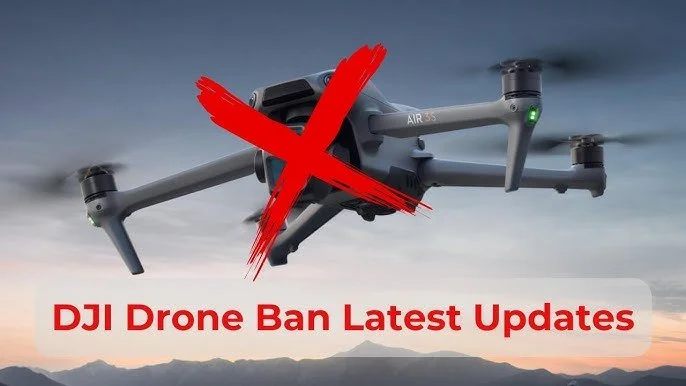
On December 23, 2025, a new FCC ban officially came into effect regarding DJI and other foreign-made drones. We know there is a lot of confusion right now, so we want to break down exactly what this means for you as a pilot.
1. What actually happened?
The FCC has added DJI to its "Covered List."
The Meaning: The FCC will no longer grant new equipment authorizations for DJI products.
The Result: Any new drone models that DJI tries to release from this point forward cannot be legally imported or sold in the United States.
2. Can I still fly my drone?
YES.The ban is not retroactive. It does not ground existing drones.
If you own a Mavic 3, Air 3, Mini 4 Pro, or any other previously authorized drone, it is 100% legal to keep flying it.
Retailers are also allowed to sell through their existing stock of these authorized models.
The following current models already have their FCC IDs and are completely legal to buy and fly:
✅ Mini 4 Pro (Safe)
✅ Mavic 3 Pro / Classic (Safe)
✅ Air 3 (Safe)
✅ Avata 2 (Safe)
✅ Neo (Safe)
3. The Risk with New Drones (e.g., Mini 5 Pro)
This is where you need to be careful. The ban specifically targets future technology.
The Mini 5 Pro Risk: If you see listings for newer models like the Mini 5 Pro (or other unreleased tech), exercise extreme caution. Because these models likely did not receive FCC authorization before the Dec 23 cutoff, they technically cannot be legally operated in the US.
Gray Market Warning: Buying these newer models from overseas carries high risk: they may be geofenced (software locked) from taking off in the US, and you will have zero warranty or repair support here.
4. Our Recommendation: Buy DJI Now
Despite the ban, we still recommend DJI drones for one simple reason: There is currently no better alternative. US-made competitors have largely exited the consumer space to focus on expensive military/enterprise hardware. For photography, ease of use, and safety features, DJI remains the king.
🛑 WARNING: Do Not Buy These Future ModelsThe ban specifically blocks NEW FCC authorizations. This means the following anticipated models are effectively illegal to import or operate in the US:
❌ DJI Mini 5 Pro
❌ DJI Mavic 4 Series
❌ DJI Avata 3
Do not attempt to buy these internationally. They likely will not fly in the US due to software geofencing, and operating a device without a valid FCC ID violates federal law. Stick to the Mini 4 Pro, Mavic 3, and Avata 2—they are the final generation of "safe" drones.
Our advice: If you have been waiting to buy a drone, do not wait for the "next big thing." It isn't coming to the US.
Secure a Mini 4 Pro or Mavic 3 series now while stock is still available in the US.
These "grandfathered" drones will likely hold their value incredibly well as they become the last generation of high-tech consumer drones legally available in the States.
📡 Drone Tech Watch: Innovation from the Frontlines
While we enjoy flying for fun and photography, drone technology is evolving rapidly in conflict zones. Here are two developments changing the landscape of aviation warfare that you should know about.
1. The "Spider Web" Drones: Fiber Optics & Jamming
In Ukraine, electronic warfare (jamming) has become so effective that standard radio-controlled drones often fall out of the sky before reaching their targets. The solution? Fiber optic tethers.
Engineers are now attaching spools of lightweight fiber optic cable—sometimes up to 10 miles long—directly to drones.
The Advantage: Because they are hard-wired to the controller, these drones are completely immune to wireless jamming.
The Cost: This "low-tech" solution has created a surreal environmental hazard. Towns like Lyman have been documented covered in miles of plastic wire, creating a "web" over streets and trees.
Read more: ‘They cannot be jammed’: fibre optic drones pose new threat in Ukraine (The Guardian)
2. The "Bird Claw" Drone (SNAG)
You might have seen recent viral clips of drones landing on tree branches using mechanical claws. This technology, known as SNAG (Stereotyped Nature-Inspired Aerial Grasper), was originally developed by Stanford researchers to mimic how peregrine falcons perch.
The Tech: The drone absorbs the impact energy of landing to mechanically snap its claws shut around a branch in milliseconds.
The Application: In a conflict setting, this allows surveillance drones to "sleep" in trees, conserving battery for hours or days while watching unsuspecting targets below, effectively turning a drone into a semi-permanent security camera.
Read more: Stanford engineers build a bird-like robot (Stanford News)